1. The Rise of Next-Gen AI Silicon
Innovations in GPU/NPU Architectures
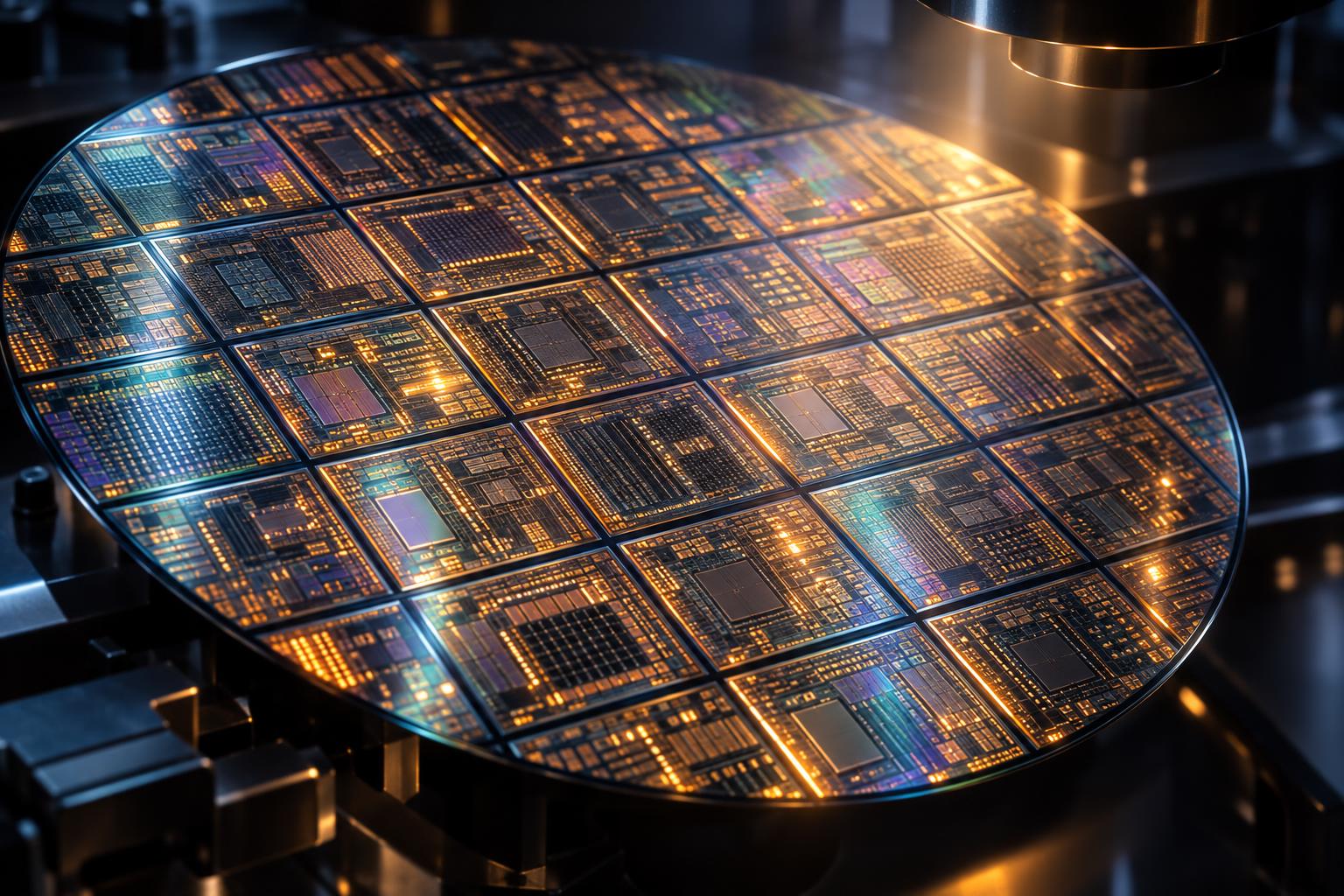
The landscape of AI silicon is undergoing a transformative shift, driven by innovations in GPU and NPU architectures. Companies like Blackwell and Groq are at the forefront, pushing the boundaries of what's possible in AI compute. These new architectures are designed to handle the increasingly complex models that power modern AI applications, offering unprecedented levels of parallelism and efficiency. The integration of specialized processing units tailored for AI tasks enables faster computation and reduces energy consumption, a critical factor as AI adoption scales across industries. As AI models become more intricate, the demand for robust and efficient silicon solutions continues to grow.
One significant advancement is the development of tensor processing units (TPUs) that excel in matrix operations, a core component of AI workloads. These units are optimized for deep learning tasks, allowing for real-time data processing and model training. The evolution from traditional CPUs to AI-specific silicon has resulted in significant performance gains, enabling more complex AI models to be deployed at scale. This shift not only enhances computational power but also reduces the latency associated with data processing, making it a game-changer for AI-driven enterprises.
Local Model Inference at the Edge
Local model inference is becoming increasingly crucial as AI applications expand to edge devices. Solutions like Ollama and vLLM are paving the way for efficient, on-device AI processing. By bringing computation closer to the data source, these systems reduce the need for continuous cloud connectivity, lowering latency and enhancing data privacy. This approach is particularly beneficial for applications that require real-time decision-making, such as autonomous vehicles and smart home devices. The shift to edge computing also alleviates the burden on centralized data centers, contributing to more sustainable AI infrastructure.
Furthermore, edge computing empowers devices to operate independently, even in environments with limited connectivity. This autonomy is essential for mission-critical applications where every millisecond counts. The ability to perform inference locally not only improves response times but also enhances the resilience of AI systems. As the edge computing ecosystem matures, it will drive further innovation in AI silicon, with specialized chips designed to meet the unique demands of edge applications.
2. Deep Architectural Mechanics & Technical Breakdown
Engineering the Future: Data Flow and Runtime Efficiency
The engineering behind next-gen AI silicon architectures focuses on optimizing data flow and runtime efficiency. At the heart of these advancements is the ability to process large volumes of data in parallel, leveraging advanced memory hierarchies and interconnects. This parallelism is achieved through innovations like systolic arrays and mesh networks that facilitate rapid data movement across the chip. By minimizing bottlenecks and maximizing throughput, these architectures ensure that AI models can operate at their full potential.
Runtime loops have also been optimized to reduce overhead and streamline processing. Techniques such as loop unrolling and pipelining allow for more efficient execution of AI algorithms, reducing the cycles needed per operation. These optimizations are critical for deploying AI models in real-time environments, where performance and efficiency are paramount. The seamless integration of these elements results in silicon architectures that are not only powerful but also adaptable to the diverse needs of AI applications.
Balancing Performance and Compute Demands
While the benefits of next-gen AI silicon are clear, there are inherent trade-offs in balancing performance with compute demands. High-performance chips often come with increased power consumption and thermal output, necessitating advanced cooling solutions and power management strategies. Companies are investing in technologies like liquid cooling and dynamic voltage scaling to address these challenges, ensuring that performance gains do not come at the expense of sustainability.
"Effective thermal management is crucial for maintaining optimal chip performance under heavy workloads."
Latency is another critical factor, particularly in applications requiring instantaneous responses. To mitigate latency issues, developers are exploring techniques such as pre-fetching and speculative execution, which can enhance the responsiveness of AI systems. By carefully managing these trade-offs, companies can deliver silicon solutions that meet the rigorous demands of modern AI workloads.
3. Real-World Implementation & Comparative Breakdown
AI Silicon in Action: A Case Study
One compelling example of next-gen AI silicon in action is its deployment in autonomous vehicles. Companies like Tesla and Waymo are leveraging advanced NPUs to power their self-driving systems, enabling real-time processing of sensor data and decision-making. These silicon solutions offer the computational horsepower necessary to process vast amounts of information from cameras, LIDAR, and radar, ensuring safe and efficient navigation. Benchmarks have shown significant improvements in processing speed and accuracy, highlighting the impact of specialized silicon on autonomous driving technology.
In addition to autonomous vehicles, AI silicon is revolutionizing fields like healthcare, where it supports real-time analysis of medical imaging and diagnostics. The ability to process complex algorithms on dedicated hardware accelerates the delivery of critical insights, improving patient outcomes and operational efficiency. These real-world applications underscore the transformative potential of AI silicon across diverse sectors.
Comparative Analysis: Legacy vs. Modern Approaches
| Technical Dimension | Legacy / Standard Approach | Modern Frontier Approach |
|---|---|---|
| Processing Power | General-purpose CPUs | Specialized NPUs/TPUs |
| Energy Efficiency | High power consumption | Optimized power management |
| Latency | Higher latency | Low-latency edge computing |
| Scalability | Limited by architecture | Highly scalable designs |
The table highlights the stark contrast between legacy and modern silicon approaches. Specialized NPUs and TPUs deliver superior processing power and energy efficiency compared to general-purpose CPUs. The shift to low-latency, edge-based computing solutions further underscores the advancements in modern AI silicon, offering scalable and efficient solutions that meet the demands of cutting-edge AI applications.
4. Operational Bottlenecks, Edge Cases & Guardrails
Identifying and Mitigating Bottlenecks
Despite the promise of AI silicon, several operational bottlenecks and edge cases must be addressed. Thermal management remains a significant challenge, as high-performance chips generate substantial heat. Failure to adequately manage this heat can lead to thermal throttling, reducing performance and potentially damaging hardware. Additionally, scaling these technologies across distributed systems introduces complexities in synchronization and data consistency.
Security and governance also present challenges, particularly in edge computing environments where data is processed outside traditional data centers. Ensuring robust security measures and compliance with data protection regulations is critical to prevent unauthorized access and data breaches.
Deployment Prerequisites and Considerations
Successfully deploying AI silicon solutions requires careful planning and consideration of several factors.
- Thermal management is essential; advanced cooling systems must be in place to handle increased thermal output from high-performance chips.
- Power management strategies, such as dynamic voltage scaling, are necessary to balance performance with energy efficiency.
- Security protocols must be robust, especially for edge deployments, to protect sensitive data from unauthorized access.
- Integration with existing infrastructure requires compatibility checks and potential upgrades to support new silicon architectures.
5. Future Trajectory & Strategic Blueprint
Next-Gen Silicon: A 12–24 Month Outlook
Over the next 12 to 24 months, the evolution of AI silicon is set to accelerate, driven by ongoing research and development in materials science and chip design. Companies are exploring new materials and fabrication techniques to enhance chip performance and efficiency further. The integration of AI silicon into a broader range of devices, from consumer electronics to industrial machinery, will continue to expand, driving innovation across sectors.
Moreover, advancements in AI algorithms and software optimization will complement silicon improvements, enabling more sophisticated applications and use cases. This synergy between hardware and software will be critical in maintaining the momentum of AI advancements and realizing the full potential of next-gen silicon architectures.
Strategic Roadmap for Adoption
Organizations looking to capitalize on the benefits of AI silicon must develop a strategic roadmap for adoption. This includes assessing current infrastructure capabilities and identifying potential areas for integration and improvement. Collaboration with silicon vendors and technology partners can provide insights into best practices and emerging trends, ensuring that organizations remain at the forefront of AI innovation.
Long-term positioning requires investment in talent and skills development to manage and optimize AI silicon solutions effectively. By fostering a culture of continuous learning and adaptation, organizations can ensure they are well-equipped to leverage the transformative power of next-gen AI silicon. As the technology landscape evolves, a proactive approach to adoption will be essential for maintaining competitive advantage.