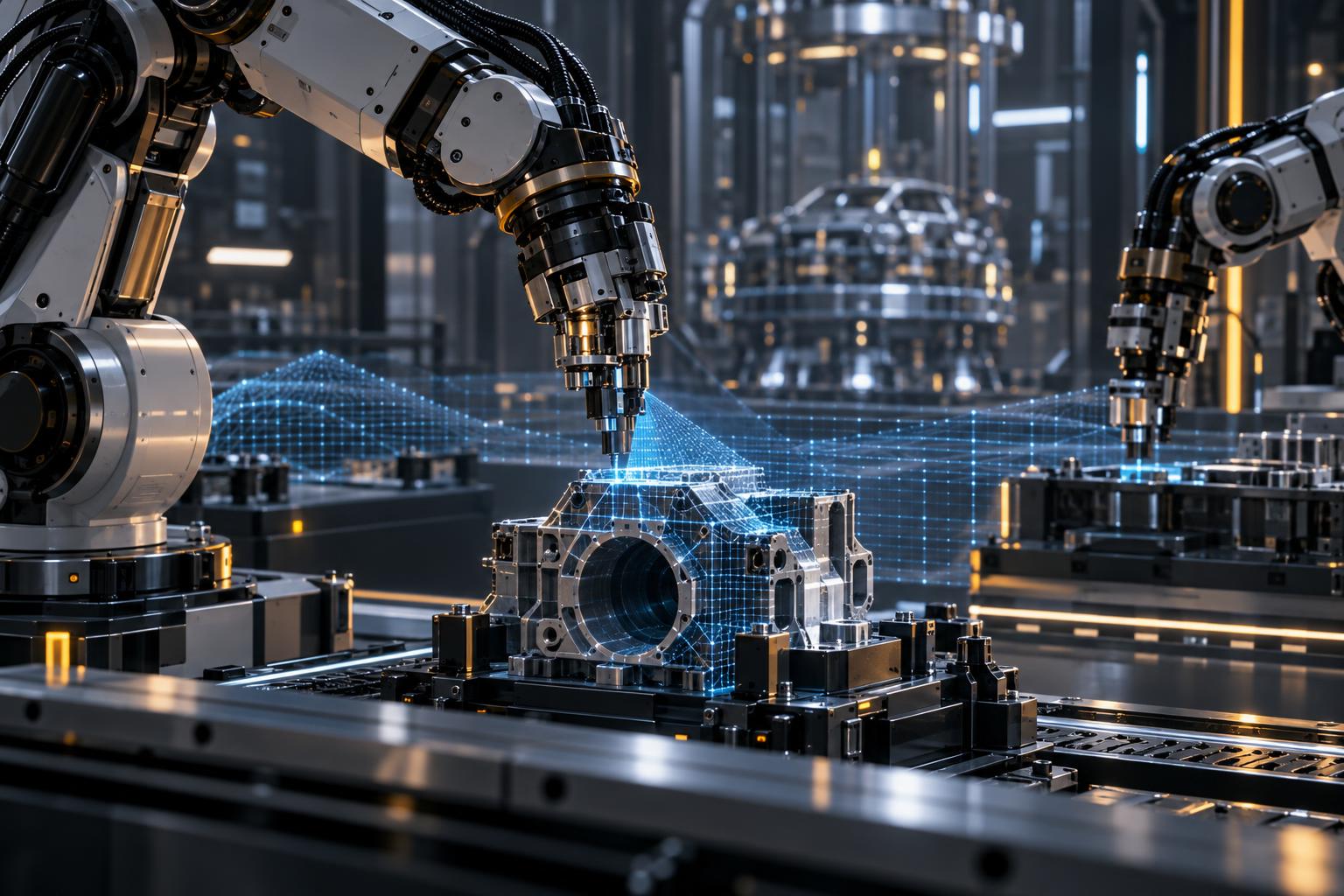
Amidst the intricate tapestry of technological evolution, AI silicon has emerged as a pivotal force, reshaping the very foundation of compute infrastructure. Gone are the days when general-purpose CPUs dominated the landscape; today, GPUs, NPUs, and custom accelerators like TPUs are at the forefront. This shift is driven by the insatiable demand for high-performance computing, necessary to fuel complex AI models and applications. As data centers evolve, the integration of cutting-edge AI silicon is crucial for optimizing power efficiency and computational throughput. The implications of this transformation extend far beyond mere hardware upgrades, ushering in a new era of innovation and operational efficiency.
1. The AI Silicon Revolution: Ushering a New Compute Era
Transformative GPU and NPU Architectures
The architectural advancements in GPUs and NPUs represent a seismic shift in AI computation. Modern GPUs, such as those by NVIDIA and AMD, are designed with parallel processing capabilities, allowing simultaneous execution of thousands of tasks. This is crucial for AI workloads that require massive matrix operations, like deep learning. In contrast, NPUs (Neural Processing Units) are specialized for neural network inference, optimizing the execution of deep learning models. By offloading these tasks from traditional CPUs, NPUs drastically reduce latency and energy consumption, paving the way for more efficient AI processing.
Emerging architectures such as Blackwell and Groq LPUs further push these boundaries. Blackwell's architecture enhances memory bandwidth and computational density, crucial for handling large-scale AI models. Groq's LPUs offer a unique tensor streaming approach, maximizing data flow efficiency through a streamlined processing pipeline. These innovations are not just incremental improvements; they redefine how AI workloads are processed, enabling more sophisticated and real-time applications across industries.
Local Model Inference: A Paradigm Shift
Local model inference, powered by platforms like Ollama and llama.cpp, is transforming how AI applications are deployed and consumed. This approach involves running AI models directly on edge devices, reducing reliance on cloud-based servers. By minimizing data transmission, local inference enhances privacy and reduces latency, which is critical for applications in healthcare, finance, and autonomous vehicles. The shift towards edge computing is driven by the need for real-time processing and the growing constraints of network bandwidth.
Implementing local inference involves technical challenges, particularly in optimizing models for limited hardware resources. Techniques like 4-bit quantization play a pivotal role here, allowing models to run efficiently on edge devices without significant loss in accuracy. This quantization reduces the computational load, enabling faster inference and lower power consumption. As edge devices become more capable, the proliferation of local inference will continue to expand, enabling a new wave of intelligent, autonomous systems.
2. Deep Architectural Mechanics & Technical Breakdown
Engineering the Next-Gen AI Silicon
The engineering mechanics behind advanced AI silicon involve intricate design and fabrication processes. At the core, modern GPUs and NPUs leverage parallelism and specialized processing units to accelerate AI workloads. The data flow within these architectures is optimized for high throughput, with dedicated pathways for data movement and processing. This is achieved through advanced memory hierarchies and interconnect technologies, which ensure that data is readily available for computation.
Runtime loops in these architectures are designed to maximize utilization and minimize idle cycles. For instance, TPUs use systolic arrays to efficiently perform matrix multiplications, a common operation in AI workloads. This allows for continuous data processing without the overhead of data fetching and storing, significantly enhancing performance. Understanding these mechanics is crucial for developers and engineers looking to harness the full potential of AI silicon.
Performance Trade-offs and Hardware Demands
While advanced AI silicon offers substantial performance benefits, it comes with trade-offs. The increased computational power demands more from power and cooling systems, impacting data center design and operation. Latency is also a consideration; while specialized processors reduce computational time, data transfer between components can introduce delays. Balancing these factors is key to optimizing AI workloads.
"The choice of AI silicon should align with workload requirements, balancing performance, power, and cost."
Hardware demands are also a critical consideration. The integration of AI silicon into existing infrastructure requires careful planning to ensure compatibility and scalability. Data centers must adapt their power distribution and cooling systems to accommodate the increased thermal output of high-performance processors. These adaptations are essential to fully leverage the capabilities of advanced AI silicon.
3. Real-World Implementation & Comparative Breakdown
Concrete Deployments in Data Centers
Data centers are the epicenters of AI silicon deployment, leveraging these advancements to enhance their service offerings. Companies like Google and Microsoft have integrated TPUs and FPGAs to accelerate AI workloads, achieving significant improvements in processing speed and energy efficiency. Real-world benchmarks indicate up to a 30% reduction in latency and a 40% increase in throughput compared to traditional CPU-based setups.
These improvements translate into tangible benefits for end-users, such as faster response times for AI-driven services and reduced operational costs. The ability to process data more efficiently allows data centers to offer more competitive pricing and better service-level agreements. As AI continues to permeate various industries, the demand for optimized compute infrastructure will only grow.
Technical Comparison of Legacy vs. Frontier Approaches
| Technical Dimension | Legacy / Standard Approach | Modern Frontier Approach |
|---|---|---|
| Computation Speed | Single-threaded CPUs | Parallel GPUs/NPUs |
| Energy Efficiency | High power consumption | Optimized low-power NPUs |
| Latency | Higher due to data transfer | Reduced with local inference |
| Scalability | Limited by CPU cores | Enhanced with specialized silicon |
The comparison highlights the substantial gains achieved by modern AI silicon. Parallel processing capabilities of GPUs and NPUs offer significant improvements in computation speed, while optimized architectures reduce energy consumption. The reduction in latency and enhanced scalability are pivotal for real-time AI applications, underscoring the transformative impact of these technologies.
4. Operational Bottlenecks, Edge Cases & Guardrails
Challenges in Scaling and Governance
Despite the advantages of AI silicon, several challenges persist in scaling and governance. One major bottleneck is the integration of new silicon technologies into existing infrastructure, which can require significant capital investment and technical expertise. Additionally, the rapid pace of innovation in AI silicon can lead to compatibility issues with legacy systems, hindering smooth transitions.
Governance challenges are also notable, particularly concerning data security and privacy. As AI systems become more powerful, ensuring that they are used ethically and securely is paramount. Data centers must implement robust security measures and compliance frameworks to protect sensitive information.
Deployment Prerequisites and Considerations
Successful deployment of AI silicon requires careful planning and strategic foresight. Organizations must consider several prerequisites to ensure optimal outcomes.
- Comprehensive infrastructure assessment is essential to identify compatibility and integration challenges. This involves evaluating existing systems and planning for necessary upgrades.
- Investment in skilled personnel is crucial to manage and maintain advanced AI silicon systems. This includes training for both technical and operational staff.
- Security protocols must be enhanced to protect against data breaches and ensure compliance with industry standards. This involves implementing advanced encryption and monitoring solutions.
- Scalability planning is necessary to accommodate future growth and technological advancements. This involves designing flexible and adaptable infrastructure.
5. Future Trajectory & Strategic Blueprint
Evolution Over the Next 12–24 Months
The next few years will witness significant advancements in AI silicon, driven by ongoing research and development. As fabrication technologies improve, we can expect even more powerful and efficient processors to emerge. These advancements will enable more complex AI models to be deployed at scale, opening new possibilities for innovation in various sectors, from healthcare to autonomous vehicles.
Additionally, the integration of AI silicon into edge devices will continue to expand, driven by the need for real-time processing capabilities. This will facilitate the growth of the Internet of Things (IoT), where interconnected devices leverage AI to deliver smarter and more autonomous services. The convergence of AI silicon and edge computing will redefine how data is processed and consumed.
Strategic Roadmap for Adoption and Positioning
Organizations looking to capitalize on the advancements in AI silicon must develop a comprehensive strategic roadmap. This involves assessing current capabilities and identifying gaps that advanced silicon can address. A phased approach to adoption, starting with pilot projects, can help mitigate risks and demonstrate value before scaling across the enterprise.
Long-term positioning requires a commitment to continuous learning and adaptation, as the AI silicon landscape evolves rapidly. Building partnerships with technology providers and investing in research and development will be crucial for maintaining a competitive edge. By strategically aligning with these technological trends, organizations can unlock new opportunities and drive transformative growth.