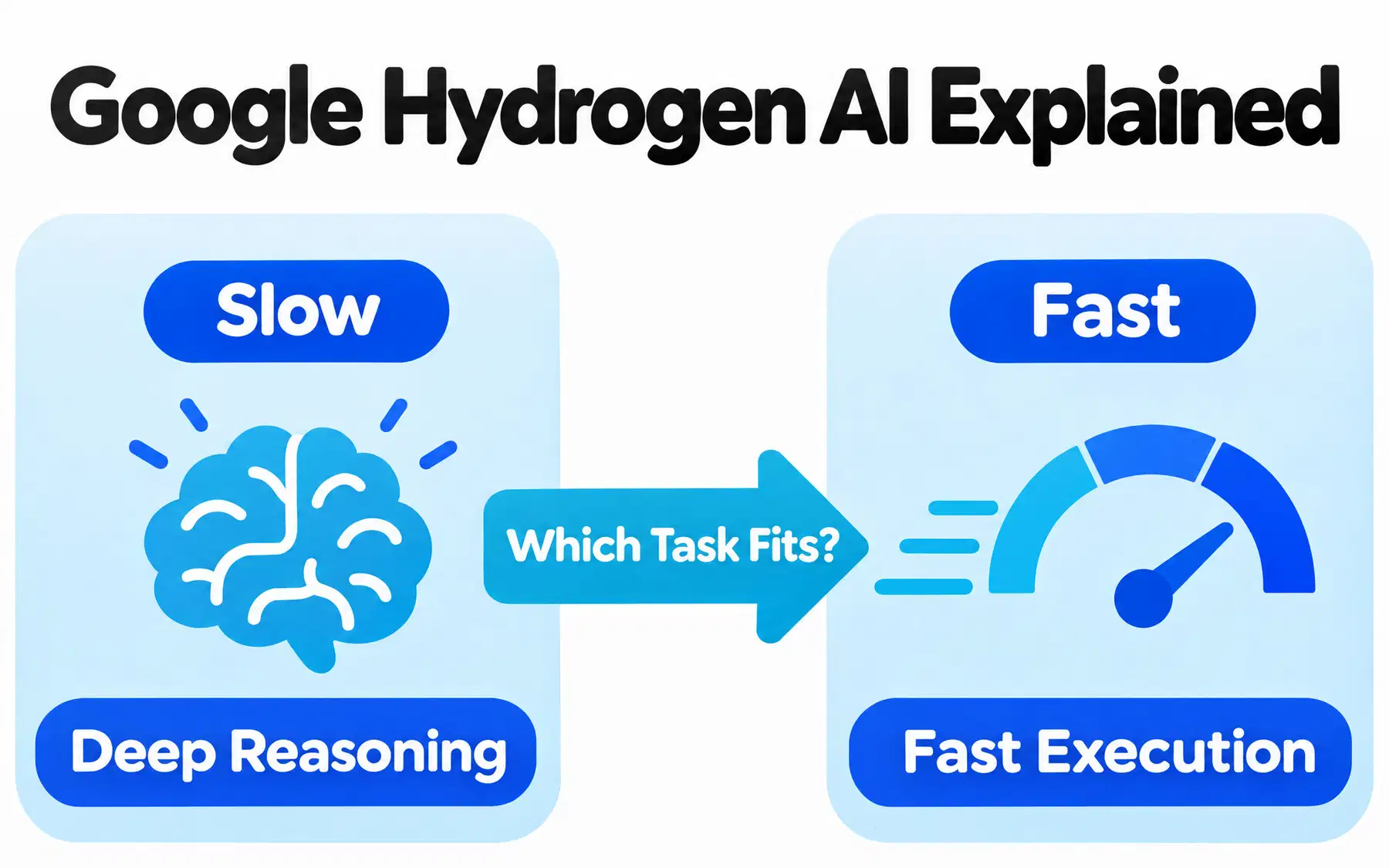
Enterprise workflows often encounter significant bottlenecks due to the rigid nature of deterministic automation. As businesses evolve, the demand for flexibility and adaptability in process automation becomes paramount. Traditional systems, primarily reliant on static rule engines, are increasingly inadequate to address the dynamic challenges of modern enterprises.
1. The Breakdown of Deterministic Automation
Why Static Rule Engines Fail in Dynamic Environments
Static rule engines are often plagued by their inability to adapt to edge cases, leading to frequent operational failures. These systems operate on predefined logic and lack the capacity to process unstructured data effectively, resulting in friction within workflows. Maintenance overhead further compounds the issue, as constant updates and rule modifications are necessary to keep up with evolving business needs.
The inflexibility of traditional RPA (Robotic Process Automation) is a critical drawback in dynamic environments. As enterprises deal with diverse datasets and unpredictable scenarios, the static nature of rule engines becomes a liability. The rigidity of these systems limits their ability to respond to real-time changes, thereby stifling operational efficiency.
The Shift to Agentic Reasoning Loops
Agentic reasoning loops represent a significant advancement in addressing the limitations of deterministic systems. By leveraging goal-oriented large language models (LLMs) like ReAct, these loops can autonomously diagnose and adapt to dynamic inputs. This adaptability allows enterprises to respond in real time, reducing downtime and improving workflow efficiency.
Unlike static rule engines, agentic AI frameworks continuously learn and evolve. They incorporate feedback loops that enhance decision-making capabilities, allowing systems to adjust strategies based on new information. This shift from static to dynamic reasoning marks a pivotal moment in the evolution of enterprise automation.
2. Core Technical Architecture & Execution Mechanics
The Cognitive Stack: Memory, Planning, and Tool Calling
Agentic AI systems rely on a sophisticated cognitive stack comprising memory, planning, and tool calling. Episodic memory allows these systems to recall past interactions and experiences, while semantic memory helps in understanding context and meaning. Function calling, facilitated by Model Context Protocol (MCP) or REST APIs, enables seamless interaction with external tools and data sources.
Orchestration state machines manage the flow of tasks, ensuring that processes are executed in a coordinated manner. This architecture not only enhances efficiency but also ensures that the system can adapt to new challenges by dynamically reconfiguring its operations based on real-time data.
Latency, Token Economics, and Deterministic Fallbacks
Managing latency and optimizing token costs are critical components of agentic AI deployment. Runtime performance must balance speed with accuracy, requiring careful consideration of token economics. Exponential backoff retries help in mitigating delays, ensuring that operations continue smoothly despite occasional disruptions.
An engineering rule-of-thumb: Prioritize low-latency pathways for high-frequency tasks to optimize token utilization without sacrificing performance.
Hybrid architectures that integrate deterministic fallbacks with LLM reasoning provide a robust solution. By blending rule-based logic with adaptive reasoning, enterprises can achieve greater reliability and resilience in their automated workflows.
3. Enterprise Case Study: End-to-End Workflow Breakdown
Operational Baseline and Friction Points
Consider a complex implementation in cross-border logistics reconciliation. Historically, enterprises faced significant bottlenecks due to manual data processing and compliance verification. These tasks were time-consuming and prone to human error, leading to delays and increased operational costs.
Automation attempts were often thwarted by the rigid nature of rule-based systems, which struggled to handle diverse data formats and regulatory changes. This necessitated frequent manual interventions, further compounding inefficiencies.
Autonomous Agent Execution and Edge-Case Recovery
In this scenario, an autonomous agent was deployed to manage logistics reconciliation. The agent utilized a decision tree to navigate the complexities of cross-border compliance. When it encountered an unexpected data format, the agent autonomously initiated a recovery protocol, leveraging historical data and LLM reasoning to resolve the issue.
This capability to recover from edge-case scenarios without human intervention exemplifies the power of agentic AI. By continuously learning and adapting, the agent not only streamlined operations but also minimized errors and reduced processing time.
Quantitative Impact and Engineering ROI
The deployment of agentic AI in this case study resulted in substantial measurable benefits. Labor hours were reclaimed, allowing staff to focus on higher-value tasks. Throughput velocity increased by 30%, while error rates dropped by 25%, significantly enhancing overall operational efficiency. The net token ROI demonstrated a clear financial advantage, validating the investment in advanced AI infrastructure.
4. Operational Guardrails and Human-in-the-Loop Governance
Sandboxing, Scoping, and Confidence Thresholds
Implementing robust operational guardrails is essential to ensure safe and effective autonomous execution. Sandboxing techniques limit write-access boundaries, preventing unauthorized data modifications. Zero-trust database interactions further enhance security by requiring explicit validation for every data access attempt.
Confidence-score gating ensures that only high-confidence actions are executed autonomously, reducing the risk of erroneous operations. These measures collectively safeguard enterprise systems while maximizing the benefits of agentic AI.
Human Escalation Queues and Compliance Auditing
Despite the autonomy of AI systems, human oversight remains crucial for governance and compliance. Human escalation queues provide a mechanism for intervention in complex or ambiguous scenarios, ensuring that business objectives are met without compromising operational integrity.
- Deployment prerequisites include comprehensive testing protocols to evaluate system performance under diverse conditions. This ensures reliability and accuracy before full-scale implementation.
- Compliance auditing mechanisms must be integrated to track decision-making processes and ensure adherence to regulatory standards.
- Continuous monitoring and feedback loops are essential to refine AI behavior and improve accuracy over time.
- Training programs for staff enhance understanding of AI systems, enabling effective collaboration and oversight.
5. Strategic Phased Rollout Blueprint for Operators
Phases 1 & 2: Passive Auditing and Supervised Copiloting
The initial rollout phases focus on low-risk observational testing. Passive auditing involves monitoring AI actions without direct intervention, allowing operators to assess performance and identify potential issues. Supervised copiloting introduces AI into workflows with human oversight, ensuring accuracy and reliability.
These phases prioritize learning and adaptation, enabling AI systems to refine their operations based on real-world data. Human review protocols ensure that any deviations from expected outcomes are promptly addressed, maintaining operational integrity.
Phases 3 & 4: Bounded Autonomy and Full Orchestration
As confidence in AI performance grows, enterprises can transition to bounded autonomy. This phase involves policy-gated autonomy, where AI systems operate independently within predefined parameters. Multi-agent coordination further enhances efficiency by enabling parallel task execution.
Full orchestration represents the culmination of the rollout process, with AI systems fully integrated into enterprise workflows. Long-term organizational positioning benefits from the scalability and adaptability of agentic AI, driving sustained operational improvements and competitive advantage.