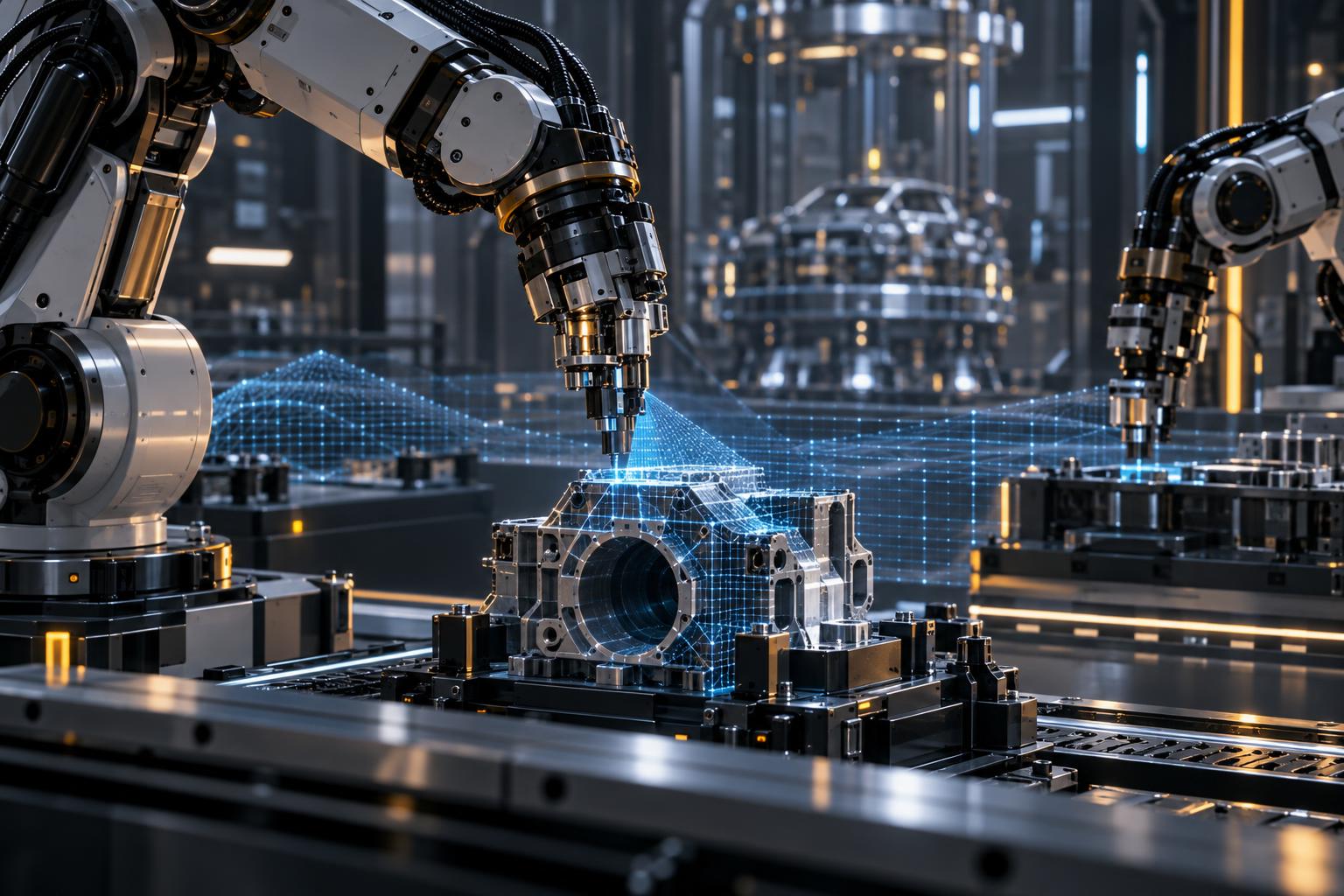
The landscape of artificial intelligence is undergoing a seismic transformation, driven by advancements in AI silicon and edge computing infrastructure. As traditional CPUs struggle to meet the demands of modern AI workloads, specialized processors like GPUs, NPUs, and TPUs are stepping into the spotlight. These innovations promise unprecedented speed and efficiency, enabling AI models to process vast amounts of data in real time. The shift towards edge computing is further amplifying this transformation, bringing intelligence closer to the data source. This evolution is not just enhancing computational power but also redefining the architecture of AI systems, paving the way for more responsive and intelligent applications.
1. The Emergence of Specialized AI Silicon
Redefining Compute Power
AI silicon, specifically designed to handle the unique demands of machine learning tasks, is transforming the computational landscape. Traditional CPUs, while versatile, are not optimized for the parallel processing required by AI algorithms. In contrast, GPUs offer thousands of cores that work simultaneously, significantly accelerating the training and inference processes. This shift is crucial as models grow in complexity, requiring more computational resources to maintain performance. The introduction of NPUs and TPUs further diversifies this landscape, providing tailored solutions that cater specifically to AI workloads.
The impact of these specialized processors extends beyond speed. By optimizing power consumption and heat generation, they enable more sustainable AI operations. This is particularly significant in data centers where energy efficiency directly translates to cost savings. Additionally, the scalability of these processors allows organizations to seamlessly expand their AI capabilities without overhauling existing infrastructure. This flexibility is crucial in industries where rapid adaptation to technological advancements is a competitive advantage.
Edge Computing: A Paradigm Shift
Edge computing is revolutionizing the way data is processed, shifting the focus from centralized data centers to localized nodes. This approach reduces latency, improves response times, and enhances the overall user experience by processing data closer to its source. In scenarios where real-time processing is critical, such as autonomous vehicles or IoT devices, edge computing becomes indispensable. By integrating AI silicon into edge devices, companies can deploy intelligent systems that operate independently of cloud-based constraints.
This paradigm shift also addresses privacy and security concerns, as data can be processed and stored locally, reducing the risk of exposure during transmission. Moreover, edge computing enhances the reliability of AI systems by reducing dependence on network connectivity. In environments where internet access is limited or unreliable, edge computing ensures continuous operation, making it a vital component of modern AI infrastructure.
2. Deep Architectural Mechanics & Technical Breakdown
Engineering the Future of AI Silicon
The architecture of AI silicon is fundamentally different from traditional processors, focusing on parallelism and efficiency. GPUs, with their thousands of cores, are designed to handle multiple operations simultaneously, a feature that is essential for training deep learning models. NPUs and TPUs take this a step further by incorporating specialized circuits that accelerate specific neural network operations. This architectural innovation reduces the time and energy required for training, enabling more frequent and comprehensive model updates.
Data flow within these processors is optimized for AI tasks, with high-speed memory interfaces and bandwidth that minimize bottlenecks. The integration of AI silicon with advanced cooling solutions ensures that these processors operate at peak efficiency. Liquid cooling and innovative heat dissipation techniques are becoming standard in data centers, allowing for higher density installations and maximizing computational throughput. These engineering advancements are critical as AI models become more complex and resource-intensive.
Balancing Performance and Efficiency
While specialized AI silicon offers significant performance advantages, it also introduces new challenges in terms of power consumption and heat generation. Managing these factors is crucial to maintaining system stability and efficiency. Advanced power management techniques and dynamic voltage scaling are employed to optimize energy use without sacrificing performance. This balance is essential in edge computing scenarios where power availability may be limited.
"Efficiency in AI silicon is measured not just by speed but by the ability to perform intensive tasks with minimal energy consumption."
Latency is another critical consideration, especially in applications requiring real-time processing. The integration of high-speed memory and optimized data paths minimizes delays, ensuring rapid data processing. However, achieving this balance requires careful architectural design and a deep understanding of the specific demands of AI workloads. As such, continuous innovation in AI silicon design is essential to meet the evolving needs of AI systems.
3. Real-World Implementation & Comparative Breakdown
AI Silicon in Action: A Case Study
One of the most compelling applications of AI silicon is in autonomous vehicles, where real-time data processing is critical. Companies like Tesla and Waymo are leveraging GPUs and TPUs to handle the vast amounts of sensor data required for navigation and decision-making. In these systems, AI silicon processes data from cameras, lidar, and radar to interpret the vehicle's surroundings and make split-second decisions. This capability is crucial for ensuring safety and improving the overall driving experience.
Benchmarks from these deployments show a significant reduction in processing time compared to traditional CPU-based systems. For instance, using TPUs for image recognition tasks can reduce inference time by up to 90%, enabling faster and more accurate responses. This performance boost is essential for maintaining the reliability and efficiency of autonomous systems, particularly in complex environments where rapid adaptation is necessary.
Comparative Analysis of Compute Approaches
| Technical Dimension | Legacy / Standard Approach | Modern Frontier Approach |
|---|---|---|
| Processing Speed | Moderate (CPU-centric) | High (GPU/TPU optimized) |
| Energy Efficiency | Low | High |
| Scalability | Limited | Extensive |
| Latency | High | Low |
| Cost | Variable | Optimized for specific tasks |
The comparison highlights the significant advantages of modern AI silicon over traditional computing approaches. While legacy systems struggle with speed and efficiency, the specialized nature of GPUs, NPUs, and TPUs offers superior performance across all critical dimensions. These advancements not only enhance computational capabilities but also reduce operational costs, making them a compelling choice for future AI deployments.
4. Operational Bottlenecks, Edge Cases & Guardrails
Navigating Challenges in AI Silicon Deployment
Despite the benefits of AI silicon, several operational challenges must be addressed to ensure successful deployment. One major bottleneck is the integration of these processors into existing infrastructure. Compatibility issues with legacy systems can lead to inefficiencies and increased complexity. Additionally, the rapid pace of innovation in AI silicon means that organizations must continually adapt to new technologies, which can strain resources and budgets.
Security and governance are also critical concerns. As AI systems become more integrated into everyday operations, ensuring data integrity and protecting against unauthorized access are paramount. The highly specialized nature of AI silicon requires tailored security measures to safeguard sensitive information and maintain system reliability.
Deployment Prerequisites
Before deploying AI silicon, organizations must consider several key prerequisites to ensure a smooth transition.
- Infrastructure Compatibility: Assess existing systems for compatibility with AI silicon to avoid integration challenges. This includes evaluating hardware, software, and network capabilities.
- Scalability Planning: Develop a strategy for scaling AI capabilities to accommodate future growth. This involves forecasting computational needs and planning for hardware upgrades.
- Security Protocols: Implement robust security measures to protect AI systems from cyber threats. This includes encryption, access controls, and regular security audits.
- Training and Support: Provide comprehensive training for IT staff to manage and maintain AI silicon infrastructure. This ensures operational efficiency and minimizes downtime.
- Cost Management: Evaluate the financial implications of AI silicon deployment, including initial investment and ongoing operational costs, to ensure budget alignment.
5. Future Trajectory & Strategic Blueprint
The Road Ahead for AI Silicon
Over the next 12 to 24 months, the AI silicon landscape is poised for significant evolution. As demand for AI-driven applications grows, we can expect continued advancements in processor design, focusing on increased efficiency and reduced power consumption. Emerging technologies such as quantum computing may also influence AI silicon development, offering new paradigms for processing complex algorithms. The integration of AI silicon with other frontier technologies, such as 5G and IoT, will further enhance its impact, enabling more seamless and intelligent connectivity.
Furthermore, the democratization of AI silicon is likely to accelerate, making these technologies more accessible to a broader range of industries. As costs decrease and performance increases, smaller organizations will have the opportunity to leverage AI silicon to drive innovation and competitiveness. This widespread adoption will foster a more dynamic and diverse AI ecosystem, with new use cases and applications emerging across sectors.
Strategic Blueprint for Organizations
To capitalize on the opportunities presented by AI silicon, organizations must adopt a strategic approach. This involves not only investing in the latest technologies but also aligning their AI strategies with broader business objectives. A comprehensive understanding of the AI silicon landscape will enable organizations to make informed decisions about technology adoption and integration.
Long-term success will require a commitment to continuous learning and adaptation. As AI silicon technologies evolve, organizations must remain agile, ready to embrace new innovations and optimize their AI infrastructure. Building partnerships with technology providers and investing in research and development will be crucial in maintaining a competitive edge. By proactively positioning themselves at the forefront of AI silicon advancements, organizations can unlock new levels of efficiency, innovation, and growth.